Blocked Drain Plumber Near Me: Specialist vs Generalist, and the Gear That Actually Matters
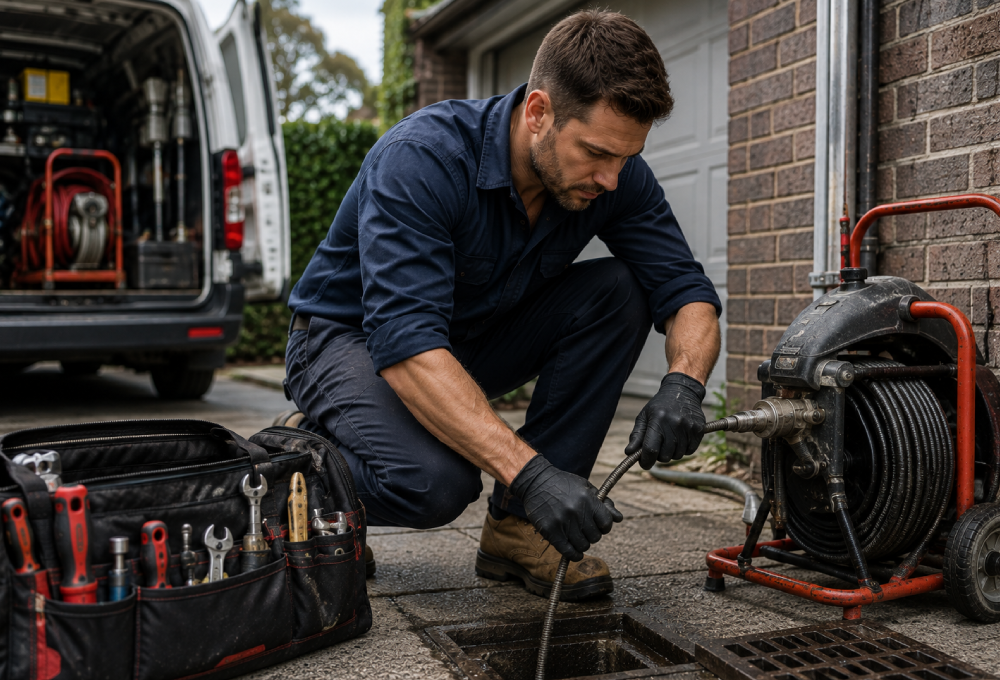

Table of Contents:
- Introduction
- Drain Clearing vs Fixing: the Distinction That Changes Everything
- The Gear That Separates Specialists From Generalists
- When You Need a Specialist, and When You Don't
- Sydney's Particular Drain Challenges
- Relining vs Digging: Understanding Your Options for a Damaged Drain
- Preventing the Next Blockage
- How to Choose a Blocked-Drain Plumber
Any plumber can put something down a sewer pipe and pray. A true blocked drain expert will show up with a camera and a jetter, determine the actual problem and resolve it so it stays gone. Here’s how to tell them apart, and when it’s truly time to call in a professional.
One of the most frequent plumbing issues that Sydney homes encounter is blocked drains, and it’s one of the least successful home repair jobs, because while a plumber can clear a blockage, not all of them fix the problem that caused it. There are many plumbers that can clear the blockage in a drain in a week or two. Far fewer of them show up able to uncover the cause of the blockage, and work with the real cause, so it will not just come back. When you search for “blocked drain plumber near me,” you are looking for the second type, and let’s explore how to find them.
We’ll explain what really makes a blocked drain expert different to a regular plumber, what they have in their toolbox that you don’t, the types of blocked drains that Sydney’s homes and geography present, and when you need a specialist versus a competent plumber to get the job done right. At the end you will know if you need to go down another path with your recurring issue of clogged drains, or whether you have found the plumber who can help you.
Drain Clearing vs Fixing: the Distinction That Changes Everything
This is the number one idea in this entire guide. There are two aspects to a blocked drain: the blockage, the immediate obstruction preventing the water from flowing, and the cause, why the blockage happened. Once the blockage is removed, the problem today is solved. If you want to fix the problem for good, you need to solve the cause. The difference between plumbers who only do the first and plumbers who do both is enormous.
Consider a drain that blocks every few months. A plumber that just passes the snake through, gets it going, collects and goes, is genuinely useful in the moment. However, if it turns out that tree roots are growing inside a leaky pipe, or it’s sagging and trapping debris, or it has a partial collapse, that drain will clog again and again and you will be billed every time. You’re on a treadmill, paying over and over again to get rid of the symptom and leaving the cause right there. A specialist, on the other hand, will be able to use their camera to determine why it’s blocking, and explain the actual reason and a solution that will actually put an end to the blockage, which is far cheaper and more effective in the long-term.
This is the reason why the gear is important, and that’s why the questions you ask are important. A plumber equipped and inclined only to clear will keep you on the treadmill. A specialist, who can diagnose and repair, can take you off it. It is quite easy to get these two confused, before you have been charged for several bills for clearing up blocked drains.
🔑 The recurring-blockage tell: when a drain keeps clogging after being “cleared,” don’t despair, it’s an untreated cause. If a drain refuses to clear over and over again, it requires a camera to diagnose the problem rather than a fourth clearing. The most costly approach to a drain is to hire someone to unclog a backed-up drain once only, without ever seeking to understand the cause.
The Gear That Separates Specialists From Generalists
A lot can be learned about a plumber’s ability to maintain the drains by the equipment they bring along. Let’s go over the tools that a specialist will use and what they do.
The drain camera (CCTV)
This is the one tool that ends the guessing. A plumber uses a small waterproof camera on a long flexible cable to go down the drain and look through it, the blockage, the condition of the pipe and the cause. A camera can tell a plumber exactly what’s wrong, whether it’s a root at a particular joint, a cracked section, a sag, a collapse, a foreign object. Without one, they’re working blind, and are trying to guess the problem based on how the drain reacts. If this is a recurring or serious blockage, a CCTV inspection will be the deciding factor between a real diagnosis and an educated one. A plumbing specialist uses one, and won’t hesitate to recommend it in case of recurring clogs.
The high-pressure water jetter
The jetter uses high pressure water from a special nozzle that can scour the inside of the pipe clean; that is, it can cut through grease, remove debris and even cut through root masses. Many obstructions are easier to clear this way, as it clears the entire pipe, in contrast to a simple snake which only makes a hole in the obstruction. A snake can clear a path, a jetter can clean the pipe. Jetting is the professional tool of choice for grease build-up and root intrusion in particular, which are both very common in Sydney. A specialist has one.
Pipe relining equipment
For cracked, root-invaded or deteriorating pipes, relining installs a new pipe without digging up the old one: a resin-impregnated liner is deployed and cured in place to create a new pipe inside the old one, resistant to roots. It’s a legit expert skill, and it’s frequently the everlasting remedy that avoids the cost and disruption of excavation, and that ruinous cycle of recurring clogs. Not all plumbers will provide it, and those who do have the expertise for the tougher end of the drain job.
The humble drain snake
The usual instrument used to break up or pull out a blockage, a flexible cable that’s fed into the drain. Useful, and every plumber has one, but on its own it clears, it doesn’t diagnose or make permanent repairs. If all the plumber can do is snake a drain, then they can handle a few minor clogs, but not the diagnosis and permanent curing of a persistent or serious clog.
One easy way to determine the quality of a blocked-drain plumber: ask what they’ll do if the blockage keeps coming back. If the answer is “run the machine through it again,” that’s a clearer. If they say “put a camera down to see what’s actually causing it,” then that’s a specialist. The camera is the difference between guess and know.
Recurring blocked drain?
Our drain experts come with both the camera and the jetter, so we can pinpoint exactly what’s causing the problem and, without digging up your garden, reline it to resolve the issue for good.
When You Need a Specialist, and When You Don't
Not all blocked drains require a specialist, and it’s worth being honest about that, so you don’t over-hire for a simple job. The following are general guidelines for judging.
A one-off, simple blockage, a basin or shower that drains slowly due to hair and soap, a blocked toilet on a single occasion because of an overload of paper, is usually something any competent plumber can handle, or that you might even manage yourself with a plunger or a little mechanical clearing. If it’s a first-time, localised, easily-explained blockage, you don’t necessarily need the full specialist treatment. Get rid of it and walk away.
If the same drain blockage keeps happening, it’s the typical indicator that it’s time to get a specialist in, because if it keeps recurring, the cause isn’t being resolved, which a camera could find and a proper fix could end. Avoid paying to clean the same drain, have it diagnosed.
If several fixtures are backing up at the same time, or several are draining slowly, it indicates that there is a problem further down the plumbing system, in a shared or main line, the realm of a specialist. This may also be a precursor to sewer backup and water damage, an Emergency Plumbing situation that should be taken seriously.
If there’s any of the more serious signs, the water backing up, the drains gurgling, smelly water, wet spots in the garden over the drain, and extremely slow water flowing through the house, that’s a sign of a serious underlying issue (roots, collapse, severe blockage) and it needs a camera and a specialist to clear the blockage, it cannot be done with a drain cleaner alone.
Simple and one-time: any competent plumber (or a plunger). Recurring, multiple or with structural indicators: get a true drain professional with a camera. Matching the plumber to the problem not only saves you money on the small jobs, but also means you don’t skimp on the big ones. And for commercial properties, where a blocked drain can shut you down, the threshold for calling a specialist is lower still.
Sydney's Particular Drain Challenges
Sydney’s housing and topography throw up a few special challenges with drains and stormwater drains, and a local expert who’s familiar with them is an excellent place to start, as they’ll be able to identify your situation in no time.
Old clay drains with tree roots. The traditional Sydney drain issue, particularly in established, leafy residential areas. Older houses were connected with earthenware pipes (clay pipes) with a joint every metre or so. Over decades, ground movement causes the joints to crack, and the roots of the magnificent trees of Sydney get in through the joints, attracted by the water and nutrients. This results in the famous recurring blockage, and since the roots are cleared and regrow, these drains will also block periodically, usually about once a year, if the problem is not resolved. Root-invaded drains are ideal for camera diagnosis and relining, as relining makes the pipe impossible for roots to access at the old joints.
Oil or grease in the kitchen and communal drains. One of the primary causes of grease blockages is fat that runs down warm and congeals as it cools, becoming clogged in the pipe. It often occurs where the kitchen sink is heavily used, and in shared drainage of apartment buildings. The solution is jetting, a very effective way of removing the grease from the pipe walls, not just poking through them.
Ageing pipework in older suburbs. A common issue throughout Sydney’s older stock is that drainage systems are old (decades old), cracked, sagged, or worn out and are likely to trap debris and become blocked. They should be diagnosed to determine what the problem is, and they can often be relined or repaired without having to be cleared over and over.
Foreign objects and wipes. A major cause of toilet blockages is the so-called “flushable” wipes which don’t disintegrate in water and get trapped in drains and sewers, so much so that water authorities urge against flushing them. Even toys and objects end up in toilets in homes with young children. Most of the time these blockages can be cleared, but a camera will ensure that nothing is missed.
🌳 Sydney root cycle: tree roots growing into cracked clay drains block them, then regrow and block them again, the classic cycle in Sydney’s older, leafy suburbs. A drain inspection and relining stops the treadmill, because the roots can no longer find a cracked joint to enter. A local drain specialist will know this pattern.
Relining vs Digging: Understanding Your Options for a Damaged Drain
If the camera shows that a drain is not only clogged but damaged (cracked, root-invaded, sagged or partially collapsed), you’ve reached a real decision point, and it’s important to understand the options so you can weigh them properly when a specialist recommends one.
In the past, if the pipe was damaged, the only remedy was to dig it up, replace it and reinstate the top layer of garden, paths, driveway, etc. that was removed. It can work, and sometimes it is really needed (a pipe totally collapsed, for example, cannot be relined). But it’s the most disruptive and costly, as you’ll be paying not only for the pipe work, but also for the machinery, the excavation work, and the restoration of all the above as well, which on an established site in Sydney with mature gardens, paving or driveway over the drain line can be substantial.
Pipe relining came to the fore as the no-dig solution when pipes were in bad condition but still in place. A liner is placed inside the existing pipe and then cured in place, creating a new pipe inside the old pipe, without any trench or dug-up garden, and with an internal surface that is smooth and impervious to root intrusion because the old cracked joints are now closed over. In particular, for root-invaded clay drains (which is the typical Sydney issue!) relining is often the definitive cure, and this usually has a long warranty as the solution is expected to last for years. Not always the cheapest option on the day, but it’s often a significant cost saving when you consider the lack of excavation and reinstatement, and the permanence of it over a never-ending series of clearings.
An honest framework a good specialist offers you: clearing is most cost-effective right now, however it will not fix the damage; relining is a mid-cost permanent repair for pipes that are damaged but still in place; excavation is the final resort for pipes that are too damaged to be relined. Which is true for your drain, the camera inspection will show you, and that is why the camera is first, and why you should be wary of anyone pushing a big excavation when they haven’t shown you on camera that it’s necessary. The camera specialist guides you through what the camera displays and gives you the facts to select from.
🔮 Three options for damaged drains: clearing (which does not fix any structural damage, and is the least costly of the options); relining (which is permanent, no digging, and is the best solution for root-invaded pipes that are not collapsed); and excavation (which is the most expensive and disruptive of the options, and is reserved for pipes that are too collapsed to be relined). A camera inspection reveals the correct tier your drain should fall into, before signing up for the expensive one.
Preventing the Next Blockage
Once a specialist sorts your drain, a little prevention keeps it that way, and a great plumber will be happy to tell you exactly what that is, since the honest ones would rather you didn’t need them again for the very same issues. Habits are simple and really effective.
In the kitchen, don’t wash fats, oils and grease down warm, as that congealing grease is one of the most common causes of blockages, so keep them in the bin until they cool and set. Install sink strainers to stop food and hair going down the drain.
In the bathroom, keep hair out of shower and basin drains by clearing them regularly, rather than letting hair build up and cause a blockage.
In the toilet, don’t treat it as a bin, it’s not a garbage disposal, and “flushable” wipes are a leading cause of toilet and sewer backups, not to mention sanitary products or cotton buds.
For trees near the drain lines with a history of root issues, periodic maintenance, a scheduled jetting or inspection done ahead of the yearly blockage season, can prevent recurrence altogether.
Don’t put it off if you see the signs early, a gurgle, water not draining as quickly as it used to, act quickly while it is a small clear, not a big backup.
Prevention isn’t pretty, but it is the least expensive of all drain work: the blockage that never happens is the one that doesn’t cost anything.
How to Choose a Blocked-Drain Plumber
Here’s what you need to do to get the right person for a drain issue.
Make sure they’re set up for diagnosis, not just clearing. Ask if they offer CCTV Drain Inspection and high pressure jetting, and whether they provide relining for broken pipes. A real specialist has these; a plumber with just a snake can only clear simple clogs.
Ask about their experience with frequent clogging. The answer will say it all. A specialist says “we’ll camera it to find the cause and fix that”; a clearer, who’ll keep you on the treadmill, says “we’ll run the machine through again.”
Check the usual non-negotiables. Licensed (check on the NSW Fair Trading register), insured, local, offering emergency services for the urgent jobs, and with a proven history. Even though it’s a drain, the same rules for plumbing apply.
Before a large repair, get an accurate diagnosis. A skilled specialist will inspect the drain, demonstrate or explain what was found, and provide you with options along with pricing, such as drain cleaning, lining the drain, or digging it out as a last resort. Beware of any contractor who says he needs to dig, at high prices, but doesn’t actually show you on camera.
Opt for a fix that offers a long-term solution. If the cause is not addressed, the cheapest alternative today (another clearing) is likely to be the most costly in the long run. If the issue is a recurring one, a correct diagnosis and a permanent solution typically win on cost, even if they’re more expensive up front.
You should not be a victim of a blocked drain every time. The people who clear the same drain every year are usually the ones who keep paying clearers rather than a specialist, always treating the symptom and never addressing the cause. You can find a true blocked drain plumber in your area who has the camera to see the actual problem, the jetter to thoroughly clean it, and the lining skills to make it last. This is the less expensive and less annoying way: get the diagnosis right the first time, deal with the true problem, and that drain problem just disappears.
Fix the cause, not just the symptom
Sydney blocked drain specialists for any home or business, using camera diagnosis, high pressure jetting and no-dig relining, your drain is fixed for good, not just for now.



